
Klosterruine

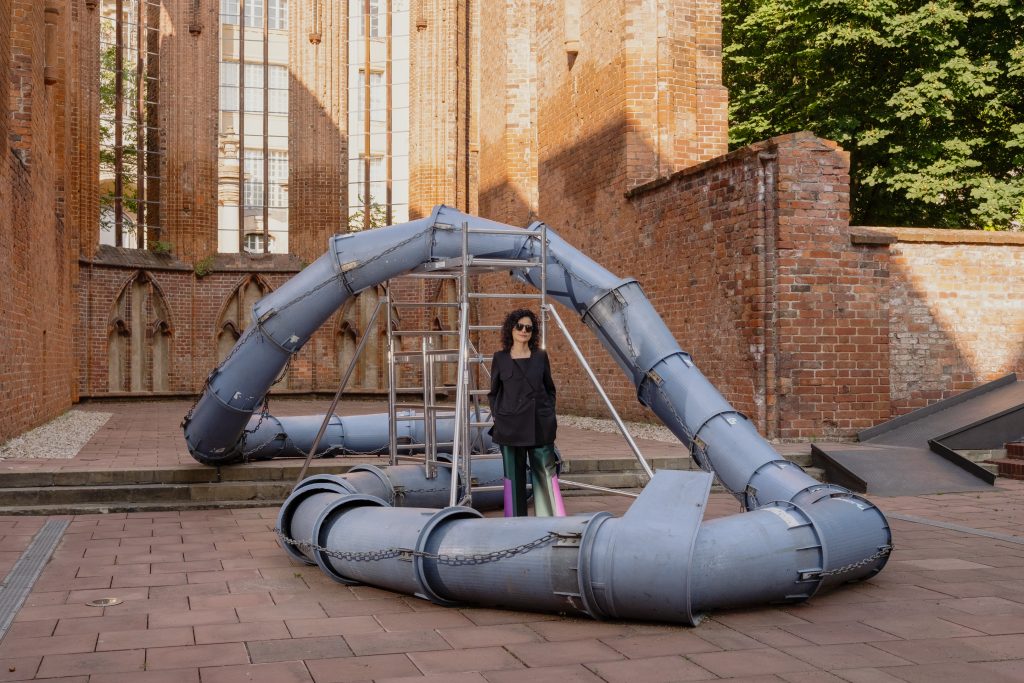
Twisted tubes in a church ruin, at the centre stands a woman in sun glasses
1/5
Neda Saeedi with her work “Monuments of Oblivion: Rivers of Lethe” at Klosterruine Berlin. Credit: Piotr Pietrus
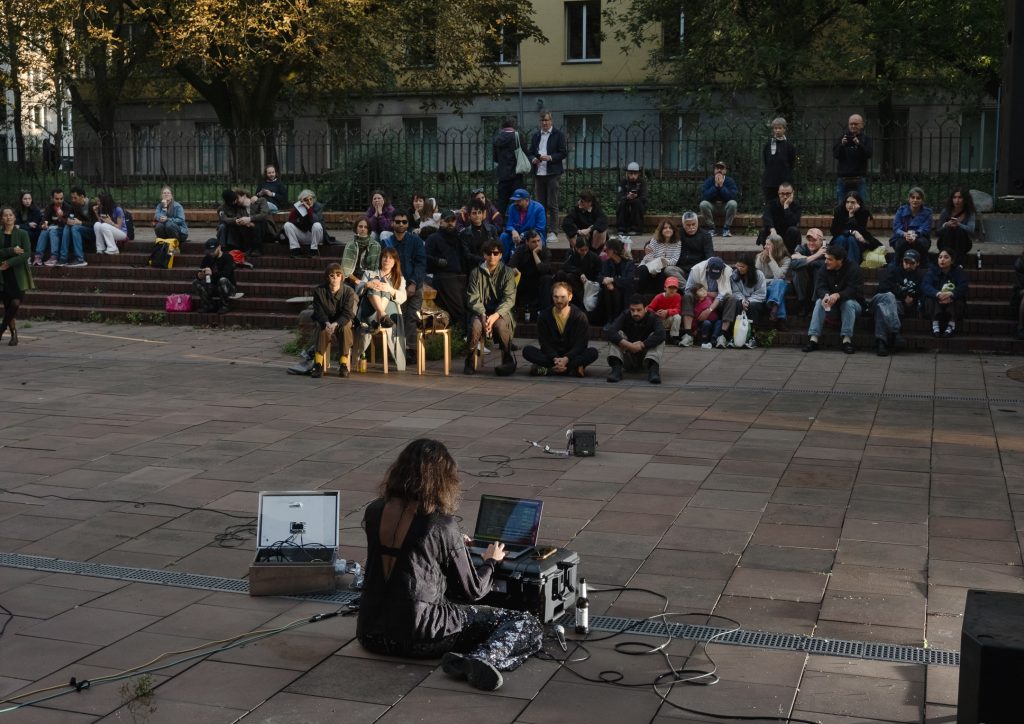
Person sitzt mit Laptop und Mikro auf dem Boden vor einem Publikum
2/5
Soundperformance von Nicole L’Huillier
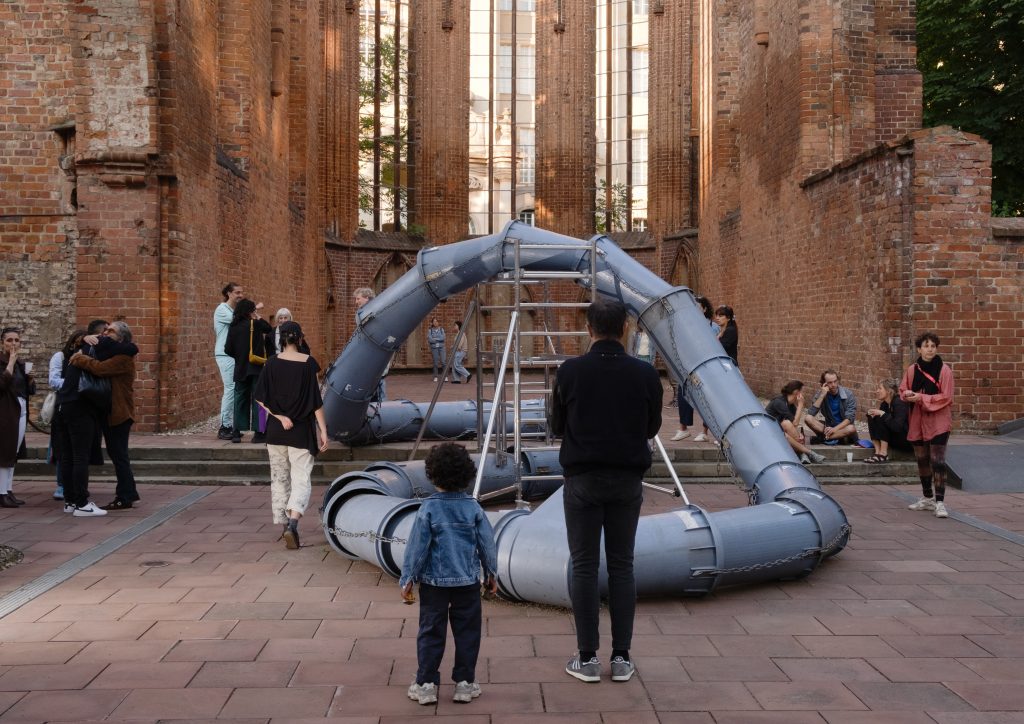
Verschlungene Rohre in einer Kirchenruine, darum herum die Skulptur betrachtende Menschen
3/5
Neda Saeedi: “Monuments of Oblivion: Rivers of Lethe” at Klosterruine Berlin. Credit: Piotr Pietrus
Colourful objects on sticks in a church ruin
4/5
“Out of Season”, Shirin Sabahi 2023. Credit: Paul Niedermayer
Silhouettes of people in dramatic blue light against the backdrop of a church ruin
5/5
Creamcake, “Paradise Found” (2019), Credit: Ink Agop

Twisted tubes in a church ruin, at the centre stands a woman in sun glasses
Neda Saeedi with her work “Monuments of Oblivion: Rivers of Lethe” at Klosterruine Berlin. Credit: Piotr Pietrus
1/5
Person sitzt mit Laptop und Mikro auf dem Boden vor einem Publikum
Soundperformance von Nicole L’Huillier
2/5
Verschlungene Rohre in einer Kirchenruine, darum herum die Skulptur betrachtende Menschen
Neda Saeedi: “Monuments of Oblivion: Rivers of Lethe” at Klosterruine Berlin. Credit: Piotr Pietrus
3/5
Colourful objects on sticks in a church ruin
“Out of Season”, Shirin Sabahi 2023. Credit: Paul Niedermayer
4/5
Silhouettes of people in dramatic blue light against the backdrop of a church ruin
Creamcake, “Paradise Found” (2019), Credit: Ink Agop
5/5

The ruin of the Franciscan monastery church is one of the last remaining testimonies to Berlin’s founding history and is one of the city’s most important architectural monuments that is open to the public and used for cultural purposes. Located in the historical and present-day centre of Berlin and in the immediate vicinity of Alexanderplatz, it is considered an outstanding monument of medieval architecture. Its changing function and usage reflect the eventful history of the city.


Klosterruine

Every year since 2016, artists and curators have been invited to draw the monastery ruins into the light of the present and open up new perspectives. These site-specific formats reflect on the architecture and history of the former Franciscan monastery church and form a radically contemporary exhibition and performance programme, thus making the monastery ruins, along with Bärenzwinger, “one of the most exciting places for contemporary art” (Kunstforum 2020).

Detailed information on how it is used – expressed in concepts that bring together contemporary artistic perspectives and the historical circumstances of the monastery ruins, as one of the last remaining testimonies to Berlin’s founding history, with current debates about the historical centre of Berlin and city planning surrounding the Molkenmarkt – can be found here.


Address

Ruine der Franziskaner Klosterkirche
Klosterstr. 73a,
10179 Berlin

Free entry

www.klosterruine.berlin


Opening Hours

April – September:
Monday – Sunday, daily 11am-7pm


Teilen